
Car import paperwork is written in three vocabularies at once: shipping, customs and vehicle registration. Here are the terms you will meet on invoices, bills of lading, declarations and registration forms, each defined in a sentence you can act on.
How to use this glossary
Terms are grouped by where you will meet them. Where a guide in this series explains a term in depth, its definition links to it. Country names and authorities are in the selector at the end: choose your country to see who does what there. For the process that uses all of these, start with the dealer's guide to sourcing cars overseas.
Trade and shipping terms
- Bill of lading (B/L)
- The carrier's document for the car: a receipt, evidence of the contract of carriage and, as a negotiable original, a document of title. Read more.
- CFR (C&F, CNF)
- Cost and Freight, an Incoterms rule: the seller pays freight to the destination port; risk passes to the buyer on board at the port of shipment. Read more.
- CIF
- Cost, Insurance and Freight: as CFR, plus the seller buys minimum insurance — Institute Cargo Clauses (C), for at least the contract price plus 10%. Read more.
- Consignee
- The party the car is shipped to, named on the bill of lading — usually the importer of record.
- Cut-off
- The last time the car and its documents can reach the terminal to make a sailing.
- FOB
- Free On Board: the seller delivers the car on board the buyer's vessel at the port of shipment; the buyer pays freight and insurance. Read more.
- Incoterms
- The International Chamber of Commerce's rules for trade terms; the current edition is Incoterms 2020.
- Institute Cargo Clauses
- Standard marine cargo insurance wordings: (A) all risks subject to exclusions, (B) and (C) named perils. Read more.
- Letter of credit (L/C)
- A bank's undertaking to pay the seller against specified documents, under the ICC's UCP 600 rules. Read more.
- Notify party
- The party the carrier tells when the car arrives — often the importer or its clearing agent.
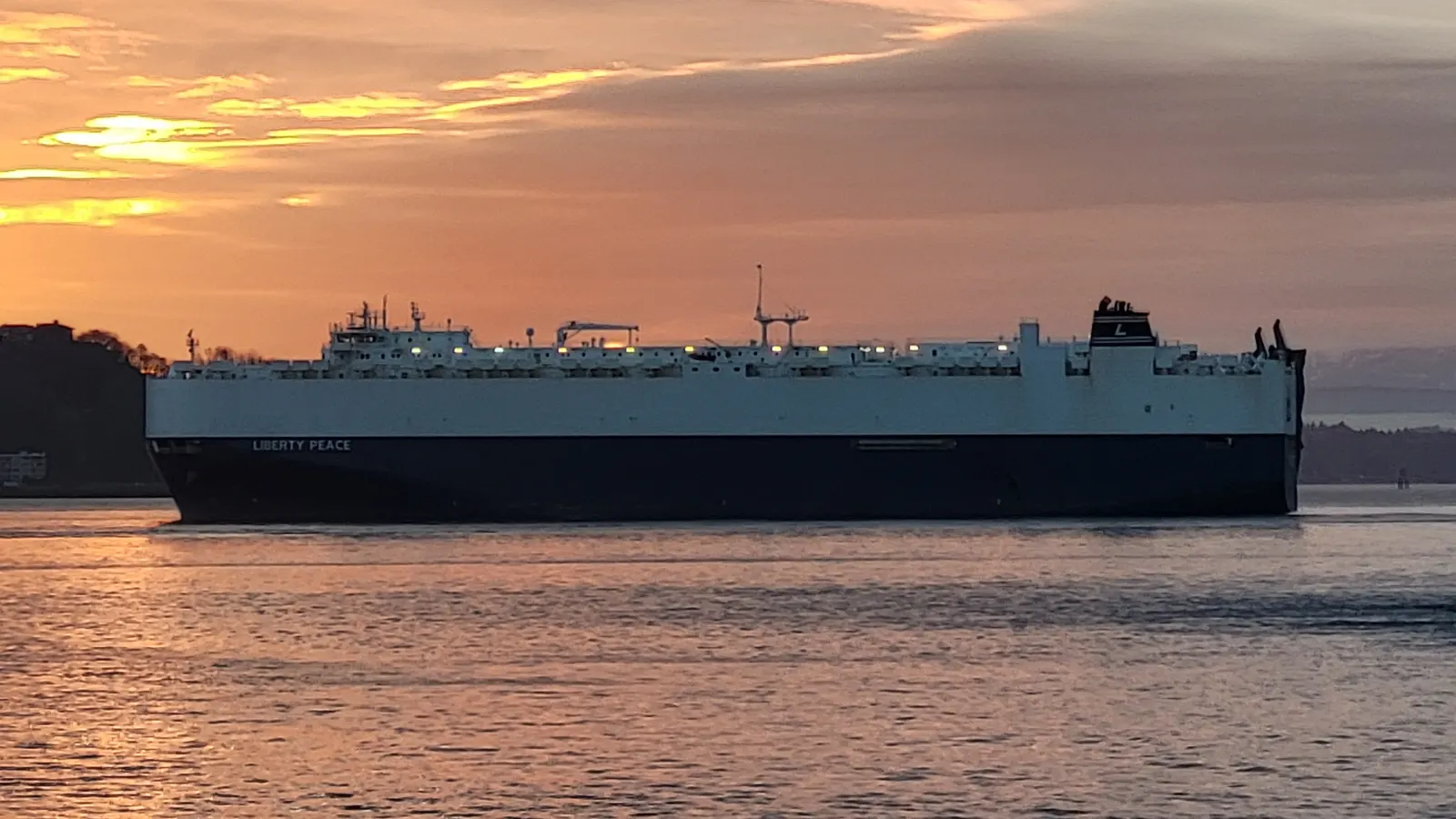
- PCC / PCTC
- Pure car carrier / pure car and truck carrier: purpose-built roll-on/roll-off ships for vehicles. Read more.
- RoRo
- Roll-on/roll-off: cars are driven on and off the vessel. Read more.
- Sea waybill
- A transport document that releases the car to the named consignee without an original; not a document of title.
- Telex release
- An instruction to release the car at the destination without the original bill of lading, which was surrendered at origin.
- Transhipment
- Unloading the car at an intermediate port and loading it onto another vessel to complete the voyage.
Customs and tax terms
- Customs value
- The value duty is charged on — usually the price plus freight and insurance to the border, or a schedule value for used cars in some countries. Read more.
- Declaration
- The formal statement to customs of what is being imported, its classification, value and origin.
- EORI number
- Economic Operators Registration and Identification number, needed by a business moving goods into the UK or EU.
- Excise duty
- A tax on particular goods, including cars in many countries, often by engine size, fuel or age. Read more.
- HS code / heading 8703
- The Harmonized System heading for motor cars principally designed to carry people; national digits split it by fuel, engine size and age.
- Import VAT / GST
- Consumption tax charged at the border, usually on the customs value plus duty; recoverable by many registered businesses.
- Landed cost
- Everything a car costs from the seller's price to being ready to sell. Read more.
- Postponed VAT accounting (PVA)
- A UK route for VAT-registered businesses to account for import VAT on the VAT return instead of paying at the border.
- Preferential origin
- Status that lets goods originating in a trade-agreement partner enter at a lower duty rate — if the origin can be proved.
- Statement on origin
- The exporter's declaration that goods originate under a trade agreement, used to claim preferential duty.
Vehicle and registration terms
- Auction sheet
- In Japan, the auction house's inspection report on a lot: grade, body diagram and notes. Read more.
- Certificate of Roadworthiness (CoR / CRW)
- The certificate issued after a pre-shipment inspection for countries such as Kenya and Uganda. Read more.
- Export certificate
- The source country's record that the car has been deregistered for export; treated by many destinations as its foreign registration.
- IVA
- Individual Vehicle Approval, the UK's approval test for most imported cars under 10 years old. Read more.
- MOT
- The UK's annual roadworthiness test for cars over three years old; its history, with mileage, is published on GOV.UK.
- NCTS
- Ireland's National Car Testing Service, which registers imported vehicles for Revenue and collects VRT.
- NOVA
- Notification of Vehicle Arrivals: telling HMRC a vehicle has arrived in the UK, within 14 days.
- OMSP
- Open Market Selling Price, the Irish market value Revenue uses to calculate VRT.
- PPSR
- Australia's Personal Property Securities Register, which records finance owed against a vehicle.
- Shaken
- Japan's statutory vehicle inspection; odometer readings taken at each one form the car's mileage record.
- SVA
- Single Vehicle Approval, required in Malta for a used car from outside the EU and in Cyprus for a left-hand-drive car.
- V5C
- The UK vehicle registration certificate (log book); its permanent-export section is sent to DVLA when a car leaves the UK.
- VRT
- Vehicle Registration Tax, Ireland's registration tax on cars, charged on the OMSP.
Who does what in your country
Choose your country to see how clearance works there and which authority is responsible, with links to its own pages.
| Country | Customs clearance |
|---|---|
| A shipped car must be declared by a shipping company or customs agent, and HMRC must be told it has arrived (NOVA) within 14 days. | |
| A car from outside the EU is declared to Revenue for release into free circulation, and VAT and duty are paid before customs releases it. | |
| A car from outside the EU clears Maltese customs, with duty and VAT paid, before Transport Malta will register it. | |
| Import duty and VAT are paid to Cyprus Customs at importation; a car from the UK has been a third-country import since 2021. | |
| KRA treats a vehicle import like other goods: it is declared, taxed on KRA's valuation and released once duties are paid. | |
| TRA assesses and collects duty, VAT and excise at the port, and releases the car once they are paid. | |
| URA clears the car, and the UNBS inspector confirms that it matches its roadworthiness certificate. | |
| MRA Customs assesses excise and VAT on the car and releases it once they are paid. | |
| The car clears Jamaica Customs on the strength of the Trade Board permit, which is applied for electronically through JSWIFT. | |
| The car clears the Customs and Excise Division against the import licence. | |
| Customs releases the car once GST is paid and biosecurity clearance is given; entry certification follows release. | |
| Sri Lanka Customs assesses duty, excise and luxury tax on the car and releases it once they are paid. |
Choose a country for its full rules and the official sources, checked 27 October 2026.
Customs clearance · United Kingdom
A shipped car must be declared by a shipping company or customs agent, and HMRC must be told it has arrived (NOVA) within 14 days.
- GOV.UK states that you must pay a shipping company or customs agent to make the import declaration for a vehicle that arrives by sea.
- Duty and VAT are paid at the border, and must be paid before the car can be registered.
- A VAT-registered company makes the NOVA notification through HMRC's online NOVA service, which accepts a spreadsheet upload for several vehicles.
Registration · United Kingdom
The car is registered with DVLA on form V55/5 once NOVA, approval and any MOT are complete.
- The registration fee is £55, and DVLA keeps the original foreign registration document.
- The V5C registration certificate can take up to six weeks to arrive.
- The car may not be driven on a public road until it is registered, except to a pre-booked MOT or approval test.
Sources for United Kingdom, checked 27 October 2026:
- Importing vehicles into the UK — GOV.UK
- Importing vehicles into the UK: telling HMRC (NOVA) — GOV.UK
- Vehicle registration: new registrations — GOV.UK (DVLA)
Customs clearance · Ireland
A car from outside the EU is declared to Revenue for release into free circulation, and VAT and duty are paid before customs releases it.
Registration · Ireland
An imported car must be registered within 30 days of entering the State, through the NCTS, which registers vehicles for Revenue and collects VRT.
- Revenue's VRT manual describes booking an NCTS appointment within 7 days of the car entering the State, with registration completed within 30 days.
Sources for Ireland, checked 27 October 2026:
Customs clearance · Malta
A car from outside the EU clears Maltese customs, with duty and VAT paid, before Transport Malta will register it.
Registration · Malta
Registration and licensing are done with Transport Malta, which also assesses the registration tax.
Sources for Malta, checked 27 October 2026:
Customs clearance · Cyprus
Import duty and VAT are paid to Cyprus Customs at importation; a car from the UK has been a third-country import since 2021.
Registration · Cyprus
The Road Transport Department registers the car; the government's business portal gives the registration fee as €150.
Sources for Cyprus, checked 27 October 2026:
- Vehicles from countries outside the European Union — on payment of import duty and VAT — Cyprus Customs & Excise Department
- Vehicles from the United Kingdom — Cyprus Customs & Excise Department
- Running and growing your business — registering a vehicle — Business in Cyprus (Government of Cyprus)
- Road Transport Department — Ministry of Transport, Communications and Works
Customs clearance · Kenya
KRA treats a vehicle import like other goods: it is declared, taxed on KRA's valuation and released once duties are paid.
Registration · Kenya
Once customs has released it, the car is registered with the National Transport and Safety Authority.
Sources for Kenya, checked 27 October 2026:
- Importation procedure for motor vehicles — Kenya Revenue Authority
- What you need to know when importing a motor vehicle — Kenya Revenue Authority
- National Transport and Safety Authority — NTSA
Customs clearance · Tanzania
TRA assesses and collects duty, VAT and excise at the port, and releases the car once they are paid.
Registration · Tanzania
TRA registers vehicles through its Central Motor Vehicle Registration System once the car is cleared and certified.
Sources for Tanzania, checked 27 October 2026:
- Tanzania Revenue Authority — TRA
- Central Motor Vehicle Registration System — guide — Tanzania Revenue Authority
Customs clearance · Uganda
URA clears the car, and the UNBS inspector confirms that it matches its roadworthiness certificate.
Registration · Uganda
URA registers motor vehicles in Uganda once duties are paid.
Sources for Uganda, checked 27 October 2026:
- The UNBS (Inspection and Clearance) Regulations, 2022 — Uganda National Bureau of Standards
- Uganda Revenue Authority — URA
Customs clearance · Mauritius
MRA Customs assesses excise and VAT on the car and releases it once they are paid.
Registration · Mauritius
Vehicles are registered and licensed through the National Land Transport Authority.
Sources for Mauritius, checked 27 October 2026:
- Customs — motor vehicles — Mauritius Revenue Authority
- National Land Transport Authority — NLTA
Customs clearance · Jamaica
The car clears Jamaica Customs on the strength of the Trade Board permit, which is applied for electronically through JSWIFT.
Registration · Jamaica
Once cleared, the car is registered and licensed for the road in Jamaica.
Sources for Jamaica, checked 27 October 2026:
- Motor vehicle — general information — Trade Board Limited
- Pre-shipment inspection criteria (February 2023) — Trade Board Limited
Customs clearance · Trinidad and Tobago
The car clears the Customs and Excise Division against the import licence.
Registration · Trinidad and Tobago
Once cleared, the car is registered with the Licensing Division.
Sources for Trinidad and Tobago, checked 27 October 2026:
- Customs and Excise Division — Ministry of Finance
- Trade Licence Unit — Ministry of Trade, Investment & Tourism
Customs clearance · New Zealand
Customs releases the car once GST is paid and biosecurity clearance is given; entry certification follows release.
Registration · New Zealand
After entry certification the car is registered and licensed for the road.
Sources for New Zealand, checked 27 October 2026:
- Fact sheet: importing goods for business or commercial use (April 2026) — New Zealand Customs Service
- Step 4: Entry certification — NZ Transport Agency Waka Kotahi
- Importing vehicles, machinery, and parts — Ministry for Primary Industries
- Importing a used vehicle — NZ Transport Agency Waka Kotahi
Customs clearance · Sri Lanka
Sri Lanka Customs assesses duty, excise and luxury tax on the car and releases it once they are paid.
Registration · Sri Lanka
Vehicles are registered with the Department of Motor Traffic; a licensed import must be registered within two weeks of release from the port.
Sources for Sri Lanka, checked 27 October 2026:
- Sri Lanka Customs — Sri Lanka Customs
- Mid-Year Fiscal Position Report 2025 — Ministry of Finance, Sri Lanka
- Department of Motor Traffic — DMT
- Importation of a used motor vehicle under import control licence — Department of Import and Export Control
Clearing agents, who use most of these terms daily, are covered in using a customs clearing agent. When you have cars in mind, you can send a dealer inquiry.