
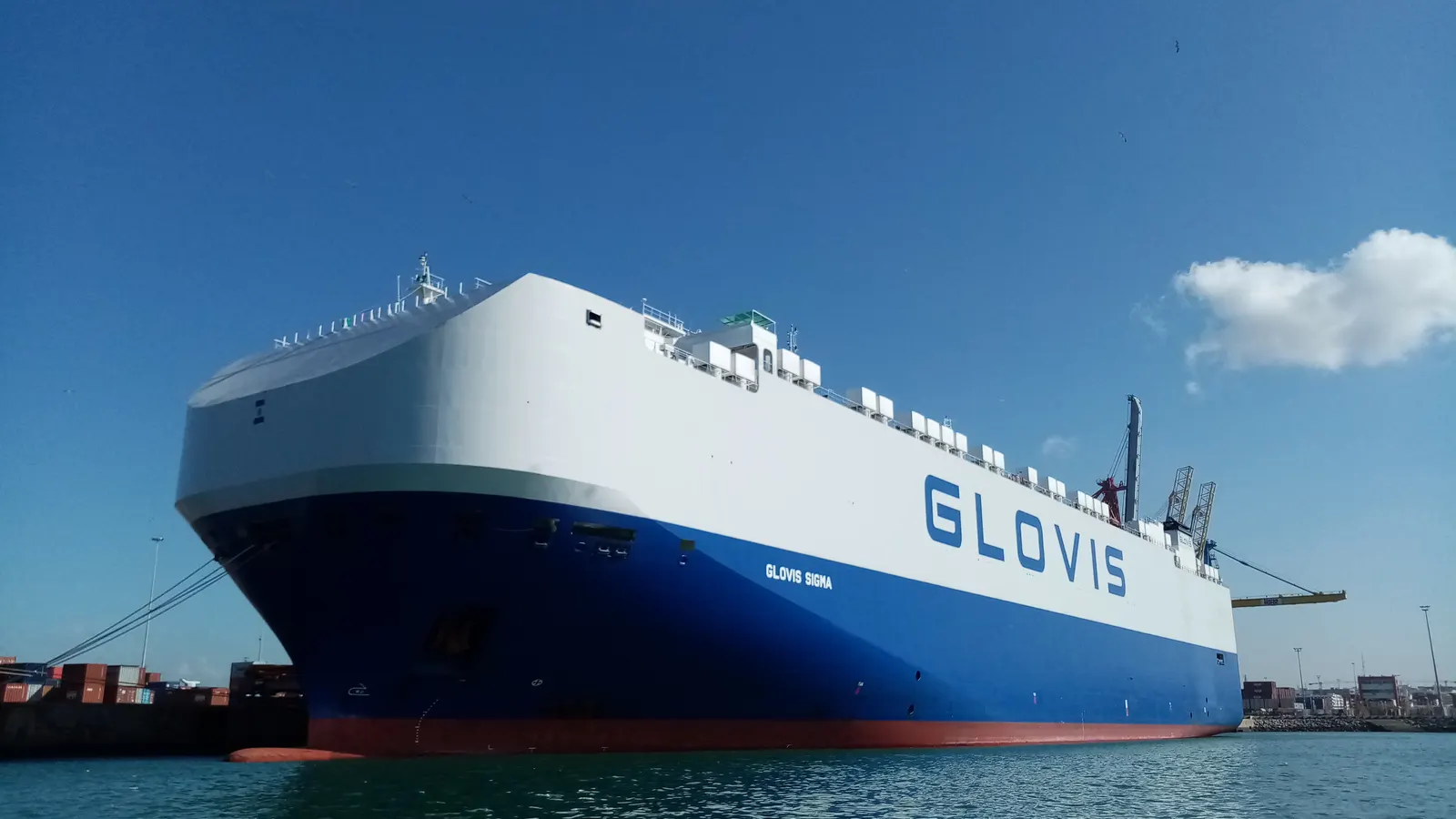
Sourcing a car from overseas means buying it in one country, exporting it, shipping it and importing it into yours under your own country's rules and taxes. For a dealer, every one of those steps is a decision with a cost attached — and the order you make them in decides whether the car arrives as stock or as a problem.
The short version
- Your own country's rules come first. Age limits, steering requirements and inspection rules decide which cars, and which source markets, are open to you at all.
- Price the car landed, not bought. Duty, excise and VAT are usually charged on a value that includes freight and insurance — and often on each other.
- The paperwork controls the car. The export certificate, the bill of lading and any inspection certificate have to match the car, character for character.
- Deadlines start when the car lands. Several countries set a fixed number of days to notify, clear or register an import.
How overseas sourcing works, in one paragraph
You confirm what your country admits, choose a source market whose stock meets those rules, and buy a specific car there from a dealer or, in Japan, at auction through a member. The car is deregistered for export, inspected where your country requires it, and shipped by roll-on/roll-off vessel or in a container under marine insurance. On arrival it is declared to your customs authority, duty and local taxes are paid in your name, and the car is registered before it can be sold or driven.
The seven decisions behind every imported car
Every overseas purchase turns on the same seven questions. They are listed in the order they have to be answered, because each one narrows the next.
- Is the car allowed in? Age, steering, standards and inspection rules in your own country. See vehicle import age limits by country and right-hand-drive import rules.
- Which market has it? The source country whose stock meets those rules and suits your buyers.
- Is this particular car what it claims to be? Condition, grade and a verified mileage history.
- What does it cost landed? Every line from the purchase to registration — the landed cost.
- How is it paid for? A method that ties your money to evidence — paying an overseas supplier safely.
- How does it travel? Vessel, terms of sale and insurance.
- How does it clear and register? The declaration, the taxes, any permit and the registration pack.
What does your own country allow in?
Start here, because these rules cannot be fixed after purchase. A car over the age limit on arrival, or with the steering wheel on the wrong side for a country that requires right-hand drive, can be refused at the port whatever its paperwork says. Choose the country you import to and the section below shows its rules and the official sources they come from.
| Country | Age limit |
|---|---|
| The UK sets no age limit on an imported car, but age decides whether the car needs vehicle approval. | |
| Ireland sets no age limit on an imported car; age affects the OMSP, and so the VRT, rather than whether the car may enter. | |
| Malta sets no age ban, but a used car from outside the EU that is over five years old pays at least the minimum registration tax. | |
| The Cyprus Customs guidance checked sets no age limit on an imported car. | |
| A used vehicle must be less than eight years old, counted from the year of first registration. | |
| Tanzania taxes older cars more heavily rather than banning them: the Finance Act 2026 excise bands run to vehicles over twenty years old. | |
| The Traffic and Road Safety Act prohibits importing a vehicle fifteen years old or more from its year of manufacture. | |
| MRA's customs page sets no age limit; confirm any age or permit condition for second-hand cars with the Mauritian authorities before you buy. | |
| Motor cars, station wagons and SUVs must be no more than six years old at import. | |
| The Trade Licence Unit's page states an eight-year limit from the year of manufacture for petrol, diesel and CNG vehicles. | |
| Eligibility turns on vehicle standards rather than a flat age limit: NZTA warns that a car registered and used overseas will not necessarily meet New Zealand's standards. | |
| Vehicle imports resumed on 1 February 2025, with an Import Control Licence required for a vehicle that exceeds the maximum age limit. |
Choose a country for its full rules and the official sources, checked 27 October 2026.
Age limit · United Kingdom
The UK sets no age limit on an imported car, but age decides whether the car needs vehicle approval.
- A car under 10 years old needs vehicle approval — for most imports, an Individual Vehicle Approval (IVA) test — before it can be registered.
- A car 10 years old or more is exempt from vehicle approval, but still needs an MOT if it is over three years old.
Steering · United Kingdom
GOV.UK's import guidance sets no right-hand-drive requirement, so a left-hand-drive car can be imported and registered once it passes approval and the MOT.
Inspection before or after shipping · United Kingdom
No pre-shipment inspection is required; the checks happen after the car lands.
- Vehicle approval (usually IVA) for a car under 10 years old, carried out by DVSA in the UK.
- An MOT for a car over three years old, before registration.
Licences and permits · United Kingdom
No import licence is needed for a car, but a business importing stock needs a GB EORI number.
- GOV.UK exempts only goods that are both uncontrolled and for personal use from the EORI requirement, so a dealer importing to sell needs one.
Sources for United Kingdom, checked 27 October 2026:
- Vehicle approval — GOV.UK (DVSA)
- Vehicle registration: new registrations — GOV.UK (DVLA)
- Importing vehicles into the UK — GOV.UK
- Get an EORI number — GOV.UK
Age limit · Ireland
Ireland sets no age limit on an imported car; age affects the OMSP, and so the VRT, rather than whether the car may enter.
Steering · Ireland
Revenue's import guidance sets no right-hand-drive requirement for registering a car.
Inspection before or after shipping · Ireland
No pre-shipment inspection is required; the car is examined at an NCTS centre when it is registered.
Licences and permits · Ireland
No import licence is needed for a car; the import is declared to Revenue and the car registered through the NCTS.
Sources for Ireland, checked 27 October 2026:
- Vehicle Registration Tax — Revenue
- Importing a vehicle into Ireland — Citizens Information
- Vehicle Registration Tax Manual, Section 1 Part A — Revenue
- National Car Testing Service — NCTS
- Importing vehicles and duty-free allowances — Revenue
Age limit · Malta
Malta sets no age ban, but a used car from outside the EU that is over five years old pays at least the minimum registration tax.
Steering · Malta
The Transport Malta documents checked set no right-hand-drive requirement; confirm with Transport Malta before buying left-hand-drive stock.
Inspection before or after shipping · Malta
A used car from outside the EU needs a Single Vehicle Approval (SVA) certificate confirming it can be registered in the EU and stating its CO₂ emissions.
Licences and permits · Malta
No separate import licence for a car was found in Transport Malta's guidance; the SVA certificate and customs clearance are the gates.
Sources for Malta, checked 27 October 2026:
Age limit · Cyprus
The Cyprus Customs guidance checked sets no age limit on an imported car.
Steering · Cyprus
A left-hand-drive car can be registered with an extra Single Vehicle Approval form (TOM 139B), according to the government's business portal.
Inspection before or after shipping · Cyprus
No pre-shipment inspection is required; the car passes an MOT and gets a CO₂ certificate from the Road Transport Department before registration.
Licences and permits · Cyprus
Customs recommends contacting the Road Transport Department before importing, to confirm the car can be registered in Cyprus.
Sources for Cyprus, checked 27 October 2026:
- Vehicles from countries outside the European Union — on payment of import duty and VAT — Cyprus Customs & Excise Department
- Running and growing your business — registering a vehicle — Business in Cyprus (Government of Cyprus)
- Road Transport Department — Ministry of Transport, Communications and Works
Age limit · Kenya
A used vehicle must be less than eight years old, counted from the year of first registration.
- KRA cites standard KS 1515 and Legal Notice No. 78 for the rule.
- KEBS's notice of 17 November 2025, as reported by Business Today, admits from 1 January 2026 only vehicles first registered on or after 1 January 2019. Read the KEBS notice for the current cut-off before you buy.
Steering · Kenya
An imported used vehicle must be right-hand drive.
Inspection before or after shipping · Kenya
Every used vehicle is inspected for roadworthiness by a KEBS-appointed agent in the country of export, and arrives with a Certificate of Roadworthiness.
Licences and permits · Kenya
No separate import licence is required; the importer needs a KRA PIN, or a certificate of incorporation for a company.
Sources for Kenya, checked 27 October 2026:
- Importation procedure for motor vehicles — Kenya Revenue Authority
- KEBS: only newer vehicles to be allowed (report of the KEBS notice of 17 November 2025) — Business Today (press report of the official notice)
Age limit · Tanzania
Tanzania taxes older cars more heavily rather than banning them: the Finance Act 2026 excise bands run to vehicles over twenty years old.
- A car under eight years old avoids the age excise altogether, which is why the age at import moves the landed cost so much.
Steering · Tanzania
Tanzania drives on the left; confirm the steering rule for your vehicle class with TRA and TBS before buying left-hand-drive stock.
Inspection before or after shipping · Tanzania
Used vehicles are checked against Tanzanian standards by the Tanzania Bureau of Standards — before shipment where TBS has an agent in the exporting country, or on arrival where it does not.
- TRA will not register the car until TBS has issued its roadworthiness certificate.
Licences and permits · Tanzania
No separate import licence for a car was found in TRA's guidance; the TBS certificate and TRA's assessment are the gates.
Sources for Tanzania, checked 27 October 2026:
- The Finance Act, 2026 — Tanzania Revenue Authority
- Tanzania Revenue Authority — TRA
- Tanzania Bureau of Standards — TBS
- Central Motor Vehicle Registration System — guide — Tanzania Revenue Authority
Age limit · Uganda
The Traffic and Road Safety Act prohibits importing a vehicle fifteen years old or more from its year of manufacture.
- A 2026 amendment bill proposes lowering the limit to thirteen years. Parliament's committee report describes it as a proposal, so check whether it has been enacted before you buy older stock.
Steering · Uganda
Uganda drives on the left; confirm the steering rule for your vehicle class with URA before buying left-hand-drive stock.
Inspection before or after shipping · Uganda
Every used vehicle needs a Certificate of Roadworthiness from the country of export under the UNBS pre-export verification programme.
- UNBS states that the certificate is valid for twelve months from issue; a vehicle with an expired one goes to destination inspection instead.
Licences and permits · Uganda
No separate import licence for a car was found; the UNBS certificate and URA's assessment are the gates.
Sources for Uganda, checked 27 October 2026:
- Report on the Traffic and Road Safety (Amendment) Bill, 2026 — Parliament of Uganda
- Uganda Revenue Authority — URA
- The UNBS (Inspection and Clearance) Regulations, 2022 — Uganda National Bureau of Standards
- Notice on certificates of roadworthiness for used motor vehicles — Uganda National Bureau of Standards
Age limit · Mauritius
MRA's customs page sets no age limit; confirm any age or permit condition for second-hand cars with the Mauritian authorities before you buy.
Steering · Mauritius
Mauritius drives on the left; MRA's page sets no steering rule, so confirm it with the National Land Transport Authority before buying left-hand-drive stock.
Inspection before or after shipping · Mauritius
MRA's customs page sets no pre-shipment inspection; the car is examined for registration in Mauritius.
Licences and permits · Mauritius
MRA's motor-vehicles page does not cover import permits; confirm with the Mauritian authorities whether your vehicle needs one before it ships.
Sources for Mauritius, checked 27 October 2026:
- Customs — motor vehicles — Mauritius Revenue Authority
- National Land Transport Authority — NLTA
Age limit · Jamaica
Motor cars, station wagons and SUVs must be no more than six years old at import.
- Light commercial vehicles are allowed six to ten years depending on type.
- Returning residents may import a car up to ten years old if they have owned it for at least six months before applying.
Steering · Jamaica
Jamaica drives on the left; confirm the steering rule for your vehicle class with the Trade Board before buying left-hand-drive stock.
Inspection before or after shipping · Jamaica
A used vehicle from the USA, the UK, Japan, Singapore or the UAE needs a pre-shipment inspection certificate, and every used vehicle must be sanitised before shipment.
- The Trade Board rejects an import-permit application for a used vehicle without its pre-shipment inspection certificate.
Licences and permits · Jamaica
An import permit from the Trade Board is required, and it must be obtained before the vehicle arrives in Jamaica.
- Certified dealers have no quantity limit for vehicles imported for resale.
- Individuals and non-dealer companies are limited in how many vehicles they may import every three years.
Sources for Jamaica, checked 27 October 2026:
- Motor vehicle — general information — Trade Board Limited
- Motor vehicle import permit procedures for returning residents — Trade Board Limited
- Motor Vehicle Import Policy (Ministry Paper 36/14) — Trade Board Limited
- Pre-shipment inspection criteria (February 2023) — Trade Board Limited
Age limit · Trinidad and Tobago
The Trade Licence Unit's page states an eight-year limit from the year of manufacture for petrol, diesel and CNG vehicles.
- Older Ministry documents still in circulation give three or four years; read the Trade Licence Unit's current notice before you buy, because the documents disagree.
Steering · Trinidad and Tobago
Used right-hand-drive vehicles are imported under a licence from the Trade Licence Unit.
Inspection before or after shipping · Trinidad and Tobago
Confirm with the Trade Licence Unit whether your vehicle needs an inspection certificate before it ships.
Licences and permits · Trinidad and Tobago
A licence from the Trade Licence Unit is required to import a used right-hand-drive vehicle, and dealer volumes are governed by quota rules.
Sources for Trinidad and Tobago, checked 27 October 2026:
- Trade Licence Unit — Ministry of Trade, Investment & Tourism
- Declaration for licence to import a used right-hand-drive vehicle — Ministry of Trade, Investment & Tourism
Age limit · New Zealand
Eligibility turns on vehicle standards rather than a flat age limit: NZTA warns that a car registered and used overseas will not necessarily meet New Zealand's standards.
Steering · New Zealand
New Zealand drives on the left; NZTA's vehicle standards govern whether a left-hand-drive car can be certified, so check them before buying one.
Inspection before or after shipping · New Zealand
Every imported used car has a border inspection by an NZTA-approved organisation and must be cleared for biosecurity by MPI.
- Cars exported from Japan go through an MPI-approved biosecurity system in Japan, and the border inspection can be done there before shipping.
- From any other country, the border inspection is arranged in New Zealand before Customs clearance is given.
Licences and permits · New Zealand
No import licence is needed; the gates are border inspection, biosecurity clearance and entry certification.
Sources for New Zealand, checked 27 October 2026:
- Importing a used vehicle — NZ Transport Agency Waka Kotahi
- Step 3: Border inspection — NZ Transport Agency Waka Kotahi
- Importing vehicles, machinery, and parts — Ministry for Primary Industries
Age limit · Sri Lanka
Vehicle imports resumed on 1 February 2025, with an Import Control Licence required for a vehicle that exceeds the maximum age limit.
- Age also changes the tariff line a car is taxed under, so the year of manufacture moves the landed cost as well as the paperwork.
Steering · Sri Lanka
The Import and Export Control Department's licence guidelines require an imported vehicle to be right-hand drive.
Inspection before or after shipping · Sri Lanka
For a licensed import, the guidelines require an assessment report from an accepted institution in the exporting country and a certificate that the car is free of mud and soil.
Licences and permits · Sri Lanka
An Import Control Licence is needed for a vehicle over the maximum age limit, and for licensed imports the guidelines require a letter of credit.
Sources for Sri Lanka, checked 27 October 2026:
- Mid-Year Fiscal Position Report 2025 — Ministry of Finance, Sri Lanka
- National Imports Tariff Guide 2025 — Chapter 87 — Sri Lanka Customs
- Importation of a used motor vehicle under import control licence — Department of Import and Export Control
Two patterns repeat across most markets. First, an age rule is counted from a fixed point — manufacture in some countries, first registration in others — and applied when the car arrives, not when you bought it. Second, a required inspection happens in the exporting country before the car sails, so it has to be booked before shipping, not discovered at the destination. The guide to pre-shipment inspection covers who carries it out.
Which source market fits your country?
This series covers seven source markets: Japan, the United Kingdom, Thailand, India, Australia, New Zealand and the United Arab Emirates. The first six drive on the left, so their domestic stock is right-hand drive. The UAE drives on the right.
| Source market | Drive | What it is known for |
|---|---|---|
| Japan | Right-hand | Young stock, graded auctions, mileage recorded at statutory inspections |
| United Kingdom | Right-hand | MOT history online, wide range of European makes |
| Thailand | Right-hand | Production base for one-tonne pickups |
| India | Right-hand | Compact cars and SUVs built in volume |
| Australia | Right-hand | Four-wheel drives and utes; a national finance register |
| New Zealand | Right-hand | A fleet that is part Japanese import |
| United Arab Emirates | Mostly left-hand | GCC-specification stock and re-exports |
Drive side follows each country's traffic. Source-market detail is in each country's dealer guide.
Each market has its own guide for dealers: Japan, the UK, the UAE, India, Thailand, Australia and New Zealand. To compare them against your own rules, read the best country to import cars from.
What does the car really cost once it lands?
The purchase price is usually the largest line, but rarely the one that decides the margin. Duty is normally charged on the customs value — the price plus freight and insurance to your border — and later taxes are often charged on a value that already includes the duty. Some countries replace your invoice with their own valuation schedule.
| Country | Duty and taxes |
|---|---|
| The UK charges customs duty, then 20% import VAT on a value that already includes the duty. | |
| A car from outside the EU pays customs duty, then 23% import VAT, then Vehicle Registration Tax (VRT) on registration. | |
| Malta charges a registration tax set by the car's CO₂ emissions and length, plus customs duty and VAT on a car imported from outside the EU. | |
| A car from outside the EU pays 10% import duty and then 19% VAT on the customs value plus the duty. | |
| Kenya charges import duty, excise duty, 16% VAT, an Import Declaration Fee and the Railway Development Levy, all based on the customs value. | |
| Tanzania charges import duty, VAT and excise duty, with extra excise on a used car that rises with its age. | |
| The Uganda Revenue Authority assesses import duty, VAT and other levies at entry; confirm the rates for your exact vehicle with URA, as they are set in each year's finance measures. | |
| Mauritius charges excise duty set by engine capacity (or by power for an electric car), plus 15% VAT. | |
| Jamaica Customs assesses duty and taxes on an imported car; confirm the rates for your exact vehicle with the Jamaica Customs Agency before you price it. | |
| The Customs and Excise Division assesses duty and taxes on an imported car; check the Ministry of Trade's budget measures on motor vehicles for the rates in force. | |
| GST at 15% is charged on the New Zealand value of the car plus any duty payable, freight and insurance. | |
| Sri Lanka charges customs import duty, excise duty and luxury tax on vehicles, and the rates change often — the Customs tariff for the month of import is the only safe figure. |
Choose a country for its full rules and the official sources, checked 27 October 2026.
Duty and taxes · United Kingdom
The UK charges customs duty, then 20% import VAT on a value that already includes the duty.
- Third-country duty on a used passenger car is 10% (UK tariff, commodity 8703 23 90 00).
- A car that originates in a partner country can enter at a preferential rate — Japan's reached 0% on 1 February 2026 — but only on an origin claim the importer can evidence. Japan Customs warns that a used car qualifies only if it can be proved originating when built, and that its manufacturer is not obliged to supply that proof.
- A VAT-registered business can reclaim import VAT, or account for it on its VAT return through postponed VAT accounting instead of paying it at the border.
- A dealer cannot use the VAT margin scheme on a car it imports itself, so VAT is charged on the full selling price when the car is sold.
How customs values the car · United Kingdom
The customs value is the price paid plus transport and insurance to the UK border, and duty and VAT are worked out from it.
- A price in a foreign currency is converted at HMRC's published monthly rate for the month of import, not at the rate your bank gave you.
- HMRC publishes each month's rates on the penultimate Thursday of the month before.
Sources for United Kingdom, checked 27 October 2026:
- Commodity 8703 23 90 00 — used passenger cars, 1,500–3,000cc — UK Integrated Online Tariff
- Application of the Japan–EU and Japan–UK rules of origin to used goods (leaflet) — Japan Customs
- Check when you can account for import VAT on your VAT Return — HMRC
- Check if you can use a VAT margin scheme if you import from, or export to, countries outside the UK — HMRC
- Importing vehicles into the UK — GOV.UK
- Exchange rates for customs and VAT — UK Integrated Online Tariff
Duty and taxes · Ireland
A car from outside the EU pays customs duty, then 23% import VAT, then Vehicle Registration Tax (VRT) on registration.
- Revenue's guidance on cars from Great Britain applies customs duty of 10% on the customs value of a car that does not qualify for preferential origin.
- Import VAT is charged at the standard rate, 23%, on the customs value plus the duty, and must be paid before the car is released from customs control.
- VRT is calculated on the car's Open Market Selling Price (OMSP) in Ireland, not on the price you paid for it.
- Revenue notes that customs duty cannot be recovered, even by a VAT-registered trader.
- Japan-built cars can qualify for 0% duty under the EU–Japan agreement, but Japan Customs warns that a used car qualifies only if its origin when built can be proved.
How customs values the car · Ireland
Customs duty and VAT are worked out on the customs value — the invoice price plus transport and insurance — while VRT is worked out on Revenue's OMSP.
- Because VRT uses the Irish open-market price rather than the purchase price, a car bought cheaply abroad does not pay less VRT for it.
Sources for Ireland, checked 27 October 2026:
- VAT implications of importing vehicles from Great Britain and Northern Ireland — Revenue
- Tax and Duty Manual: VAT and VRT on transactions involving motor vehicles — Revenue
- Vehicle Registration Tax — Revenue
- Application of the Japan–EU and Japan–UK rules of origin to used goods (leaflet) — Japan Customs
Duty and taxes · Malta
Malta charges a registration tax set by the car's CO₂ emissions and length, plus customs duty and VAT on a car imported from outside the EU.
- For a passenger car (category M1), Transport Malta calculates registration tax from the CO₂ figure, the registration value and the vehicle's length.
- A minimum registration tax applies to a used car imported from outside the EU that is more than five years old, counted from the year of manufacture; electric cars and plug-in hybrids with more than 50 km of electric range are exempt from that minimum.
- Since 1 January 2021 a car from the UK is a third-country import, and customs duty and VAT apply.
How customs values the car · Malta
Registration tax works from Transport Malta's registration value for the car, which the government's online calculator produces.
Sources for Malta, checked 27 October 2026:
Duty and taxes · Cyprus
A car from outside the EU pays 10% import duty and then 19% VAT on the customs value plus the duty.
- Cyprus Customs states that, from 22 March 2019, no excise duty is imposed on motor vehicles imported into Cyprus.
- Road tax after registration is set by the car's CO₂ emissions.
How customs values the car · Cyprus
The customs value is the purchase price plus freight and insurance to the port or airport of entry.
Sources for Cyprus, checked 27 October 2026:
- Vehicles from countries outside the European Union — on payment of import duty and VAT — Cyprus Customs & Excise Department
- Excise duties — general information — Cyprus Customs & Excise Department
- Running and growing your business — registering a vehicle — Business in Cyprus (Government of Cyprus)
Duty and taxes · Kenya
Kenya charges import duty, excise duty, 16% VAT, an Import Declaration Fee and the Railway Development Levy, all based on the customs value.
- KRA's own procedure page lists import duty at 25%, the Import Declaration Fee at 3.5% and the Railway Development Levy at 2%; press reporting since 2024 puts import duty at 35% following an East African Community tariff revision. Confirm the rate in force with KRA before pricing a car.
- Excise duty depends on fuel and engine size: KRA lists 20% for a 1,000–1,500cc petrol engine, 25% for 1,500–3,000cc petrol and for hybrids, 35% above 3,000cc petrol or 2,500cc diesel, and 10% for a fully electric car.
- VAT at 16% is charged on a value that includes the duty and excise.
How customs values the car · Kenya
KRA values a used car against its own published motor-vehicle valuation schedule rather than the invoice you paid, so two importers of the same model pay the same duty.
- KRA's procedure page links its motor-vehicle valuation template, effective 1 July 2023. The trade usually calls it the CRSP (current retail selling price) schedule.
Sources for Kenya, checked 27 October 2026:
- Importation procedure for motor vehicles — Kenya Revenue Authority
- A breakdown of vehicle importing charges and taxes — The Standard (press report of the official notice)
Duty and taxes · Tanzania
Tanzania charges import duty, VAT and excise duty, with extra excise on a used car that rises with its age.
- The Finance Act 2026, in force from 1 July 2026, sets the age excise on imported used vehicles at 18% for eight to ten years old, 35% for over ten up to twenty years, and 40% for over twenty years.
- The Citizen reports that the same Act brought engines of 1,000cc or less, previously exempt, into excise at 5%.
How customs values the car · Tanzania
TRA assesses duty and taxes on the customs value of the car; confirm with TRA how it values the exact model before you price it.
Sources for Tanzania, checked 27 October 2026:
- The Finance Act, 2026 — Tanzania Revenue Authority
- Importing a used car now costs more as Finance Act takes effect — The Citizen (press report of the official notice)
- Tanzania Revenue Authority — TRA
Duty and taxes · Uganda
The Uganda Revenue Authority assesses import duty, VAT and other levies at entry; confirm the rates for your exact vehicle with URA, as they are set in each year's finance measures.
How customs values the car · Uganda
URA assesses the car's customs value at entry; confirm with URA how it values a used car of your model and year.
Sources for Uganda, checked 27 October 2026:
- Uganda Revenue Authority — URA
Duty and taxes · Mauritius
Mauritius charges excise duty set by engine capacity (or by power for an electric car), plus 15% VAT.
- MRA's motor-vehicles page runs from 0% excise for a combustion car up to 550cc to 100% above 2,000cc, and taxes electric cars by power rating at 15% or 25%.
- MRA's older duty-calculation guide shows different engine bands for the same category. Confirm the bands in force with MRA before you price a car.
How customs values the car · Mauritius
MRA values a used car from the FOB value of identical vehicles imported before, reduced by 9% for the first month of use and 1% for each month after, to a maximum of 50%.
- Where no such value exists, MRA starts from the retail price when new in the exporting country, less 5%, then applies the same monthly reduction.
- For cars from Japan, MRA assesses the FOB value through its online second-hand vehicle valuation system.
Sources for Mauritius, checked 27 October 2026:
- Customs — motor vehicles — Mauritius Revenue Authority
- How to calculate duty and taxes payable on vehicles — Mauritius Revenue Authority
Duty and taxes · Jamaica
Jamaica Customs assesses duty and taxes on an imported car; confirm the rates for your exact vehicle with the Jamaica Customs Agency before you price it.
How customs values the car · Jamaica
Duty is assessed on the car's customs value at entry; confirm the basis for your model with the Jamaica Customs Agency.
Sources for Jamaica, checked 27 October 2026:
- Motor vehicle — general information — Trade Board Limited
Duty and taxes · Trinidad and Tobago
The Customs and Excise Division assesses duty and taxes on an imported car; check the Ministry of Trade's budget measures on motor vehicles for the rates in force.
How customs values the car · Trinidad and Tobago
Duty is assessed on the car's customs value at entry; confirm the basis with the Customs and Excise Division.
Sources for Trinidad and Tobago, checked 27 October 2026:
- Customs and Excise Division — Ministry of Finance
- Budget measures on motor vehicles (used and new) — Ministry of Trade, Investment & Tourism
Duty and taxes · New Zealand
GST at 15% is charged on the New Zealand value of the car plus any duty payable, freight and insurance.
How customs values the car · New Zealand
New Zealand Customs works GST out on the car's value plus freight and insurance to New Zealand, and any duty payable.
Sources for New Zealand, checked 27 October 2026:
- Fact sheet: importing goods for business or commercial use (April 2026) — New Zealand Customs Service
Duty and taxes · Sri Lanka
Sri Lanka charges customs import duty, excise duty and luxury tax on vehicles, and the rates change often — the Customs tariff for the month of import is the only safe figure.
- A 20% customs import duty on motor vehicles took effect on 28 January 2025, and Gazette 2421/43 added a 50% surcharge on that duty from 1 February 2025 for one year. Check with Sri Lanka Customs whether the surcharge was renewed.
- The Customs tariff carries separate lines for many cars by age, such as 'not more than three years old' and 'more than three years old'.
How customs values the car · Sri Lanka
Customs duty is assessed on the car's CIF value — cost, insurance and freight — at entry.
Sources for Sri Lanka, checked 27 October 2026:
- Mid-Year Fiscal Position Report 2025 — Ministry of Finance, Sri Lanka
- Gazette Notification No. 2421/43 (31 January 2025) — customs surcharge — Ministry of Finance, Sri Lanka
- National Imports Tariff Guide 2025 — Chapter 87 — Sri Lanka Customs
- Importation of a used motor vehicle under import control licence — Department of Import and Export Control
Three habits keep the number honest. Use the customs authority's own exchange rate for the duty, not your bank's. Separate the taxes you can recover, such as import VAT for a VAT-registered dealer in many countries, from those you cannot. And never fill a missing rate with a guess: a tax line that cannot be confirmed is a reason to ask the authority or a licensed clearing agent, not to estimate. The guide to car import duty and taxes and the guide to customs valuation explain the mechanics.
Duty, tax and registration rules change, often on a budget cycle. The country sections on this page cite the authority behind each rule and the date it was checked. Confirm the rates in force for your exact car with that authority, or a licensed clearing agent, before you commit money.
How the car moves: vessel, insurance and paper
The vessel
Running cars on well-served routes usually travel on a vehicle carrier, driven on and off (roll-on/roll-off). Several cars together, non-runners and cars on thinly served routes often travel in containers. The RoRo versus container guide compares the two, and choosing a vessel and shipping line covers direct calls, transhipment and the questions to ask before booking.
The terms of sale and the insurance
Under the Incoterms rules most often used for cars — FOB, CFR and CIF — the risk passes to the buyer once the car is on board at the port of shipment, even when the seller pays for the voyage. CIF obliges the seller to buy only minimum cover. See FOB, CFR and CIF for car imports and marine insurance for imported cars.
The paper
The bill of lading is the document that controls the car in transit, and the export certificate is what your registration authority will treat as its foreign registration. The full list is in the car import documents checklist.
Clearing customs and registering the car
Once the car lands, it is declared to customs — in many countries by a licensed agent — and released when duty and taxes are paid. Some countries then start a clock: the UK requires HMRC to be notified through NOVA within 14 days of arrival, and Ireland requires registration within 30 days of the car entering the State.
| Country | Customs clearance |
|---|---|
| A shipped car must be declared by a shipping company or customs agent, and HMRC must be told it has arrived (NOVA) within 14 days. | |
| A car from outside the EU is declared to Revenue for release into free circulation, and VAT and duty are paid before customs releases it. | |
| A car from outside the EU clears Maltese customs, with duty and VAT paid, before Transport Malta will register it. | |
| Import duty and VAT are paid to Cyprus Customs at importation; a car from the UK has been a third-country import since 2021. | |
| KRA treats a vehicle import like other goods: it is declared, taxed on KRA's valuation and released once duties are paid. | |
| TRA assesses and collects duty, VAT and excise at the port, and releases the car once they are paid. | |
| URA clears the car, and the UNBS inspector confirms that it matches its roadworthiness certificate. | |
| MRA Customs assesses excise and VAT on the car and releases it once they are paid. | |
| The car clears Jamaica Customs on the strength of the Trade Board permit, which is applied for electronically through JSWIFT. | |
| The car clears the Customs and Excise Division against the import licence. | |
| Customs releases the car once GST is paid and biosecurity clearance is given; entry certification follows release. | |
| Sri Lanka Customs assesses duty, excise and luxury tax on the car and releases it once they are paid. |
Choose a country for its full rules and the official sources, checked 27 October 2026.
Customs clearance · United Kingdom
A shipped car must be declared by a shipping company or customs agent, and HMRC must be told it has arrived (NOVA) within 14 days.
- GOV.UK states that you must pay a shipping company or customs agent to make the import declaration for a vehicle that arrives by sea.
- Duty and VAT are paid at the border, and must be paid before the car can be registered.
- A VAT-registered company makes the NOVA notification through HMRC's online NOVA service, which accepts a spreadsheet upload for several vehicles.
Registration · United Kingdom
The car is registered with DVLA on form V55/5 once NOVA, approval and any MOT are complete.
- The registration fee is £55, and DVLA keeps the original foreign registration document.
- The V5C registration certificate can take up to six weeks to arrive.
- The car may not be driven on a public road until it is registered, except to a pre-booked MOT or approval test.
Sources for United Kingdom, checked 27 October 2026:
- Importing vehicles into the UK — GOV.UK
- Importing vehicles into the UK: telling HMRC (NOVA) — GOV.UK
- Vehicle registration: new registrations — GOV.UK (DVLA)
Customs clearance · Ireland
A car from outside the EU is declared to Revenue for release into free circulation, and VAT and duty are paid before customs releases it.
Registration · Ireland
An imported car must be registered within 30 days of entering the State, through the NCTS, which registers vehicles for Revenue and collects VRT.
- Revenue's VRT manual describes booking an NCTS appointment within 7 days of the car entering the State, with registration completed within 30 days.
Sources for Ireland, checked 27 October 2026:
Customs clearance · Malta
A car from outside the EU clears Maltese customs, with duty and VAT paid, before Transport Malta will register it.
Registration · Malta
Registration and licensing are done with Transport Malta, which also assesses the registration tax.
Sources for Malta, checked 27 October 2026:
Customs clearance · Cyprus
Import duty and VAT are paid to Cyprus Customs at importation; a car from the UK has been a third-country import since 2021.
Registration · Cyprus
The Road Transport Department registers the car; the government's business portal gives the registration fee as €150.
Sources for Cyprus, checked 27 October 2026:
- Vehicles from countries outside the European Union — on payment of import duty and VAT — Cyprus Customs & Excise Department
- Vehicles from the United Kingdom — Cyprus Customs & Excise Department
- Running and growing your business — registering a vehicle — Business in Cyprus (Government of Cyprus)
- Road Transport Department — Ministry of Transport, Communications and Works
Customs clearance · Kenya
KRA treats a vehicle import like other goods: it is declared, taxed on KRA's valuation and released once duties are paid.
Registration · Kenya
Once customs has released it, the car is registered with the National Transport and Safety Authority.
Sources for Kenya, checked 27 October 2026:
- Importation procedure for motor vehicles — Kenya Revenue Authority
- What you need to know when importing a motor vehicle — Kenya Revenue Authority
- National Transport and Safety Authority — NTSA
Customs clearance · Tanzania
TRA assesses and collects duty, VAT and excise at the port, and releases the car once they are paid.
Registration · Tanzania
TRA registers vehicles through its Central Motor Vehicle Registration System once the car is cleared and certified.
Sources for Tanzania, checked 27 October 2026:
- Tanzania Revenue Authority — TRA
- Central Motor Vehicle Registration System — guide — Tanzania Revenue Authority
Customs clearance · Uganda
URA clears the car, and the UNBS inspector confirms that it matches its roadworthiness certificate.
Registration · Uganda
URA registers motor vehicles in Uganda once duties are paid.
Sources for Uganda, checked 27 October 2026:
- The UNBS (Inspection and Clearance) Regulations, 2022 — Uganda National Bureau of Standards
- Uganda Revenue Authority — URA
Customs clearance · Mauritius
MRA Customs assesses excise and VAT on the car and releases it once they are paid.
Registration · Mauritius
Vehicles are registered and licensed through the National Land Transport Authority.
Sources for Mauritius, checked 27 October 2026:
- Customs — motor vehicles — Mauritius Revenue Authority
- National Land Transport Authority — NLTA
Customs clearance · Jamaica
The car clears Jamaica Customs on the strength of the Trade Board permit, which is applied for electronically through JSWIFT.
Registration · Jamaica
Once cleared, the car is registered and licensed for the road in Jamaica.
Sources for Jamaica, checked 27 October 2026:
- Motor vehicle — general information — Trade Board Limited
- Pre-shipment inspection criteria (February 2023) — Trade Board Limited
Customs clearance · Trinidad and Tobago
The car clears the Customs and Excise Division against the import licence.
Registration · Trinidad and Tobago
Once cleared, the car is registered with the Licensing Division.
Sources for Trinidad and Tobago, checked 27 October 2026:
- Customs and Excise Division — Ministry of Finance
- Trade Licence Unit — Ministry of Trade, Investment & Tourism
Customs clearance · New Zealand
Customs releases the car once GST is paid and biosecurity clearance is given; entry certification follows release.
Registration · New Zealand
After entry certification the car is registered and licensed for the road.
Sources for New Zealand, checked 27 October 2026:
- Fact sheet: importing goods for business or commercial use (April 2026) — New Zealand Customs Service
- Step 4: Entry certification — NZ Transport Agency Waka Kotahi
- Importing vehicles, machinery, and parts — Ministry for Primary Industries
- Importing a used vehicle — NZ Transport Agency Waka Kotahi
Customs clearance · Sri Lanka
Sri Lanka Customs assesses duty, excise and luxury tax on the car and releases it once they are paid.
Registration · Sri Lanka
Vehicles are registered with the Department of Motor Traffic; a licensed import must be registered within two weeks of release from the port.
Sources for Sri Lanka, checked 27 October 2026:
- Sri Lanka Customs — Sri Lanka Customs
- Mid-Year Fiscal Position Report 2025 — Ministry of Finance, Sri Lanka
- Department of Motor Traffic — DMT
- Importation of a used motor vehicle under import control licence — Department of Import and Export Control
The guide to customs clearing agents, registering imported cars for resale and how long it takes to import a car cover this stage. When you have the cars and the destination settled, you can send a dealer inquiry and compare a landed quote against your own numbers.
Every guide in this series
| Stage | Guides |
|---|---|
| Choosing | Best country to import from · Overseas auctions · Checking mileage |
| Rules | Age limits · Steering · Pre-shipment inspection · Biosecurity · Licences and permits |
| Money | Duty and taxes · Customs valuation · Landed cost · Paying suppliers · Currency risk |
| Moving | Incoterms · RoRo vs container · Vessel and shipping line · Several cars in a container · Marine insurance |
| Paper and arrival | Bill of lading · Documents checklist · Clearing agents · Registration · Timeline |
| Reference | Ten common mistakes · Glossary |
- Importing Japanese cars into Britain specifically? The guide for UK dealers importing Japanese cars covers HMRC, DVSA and DVLA in full.