
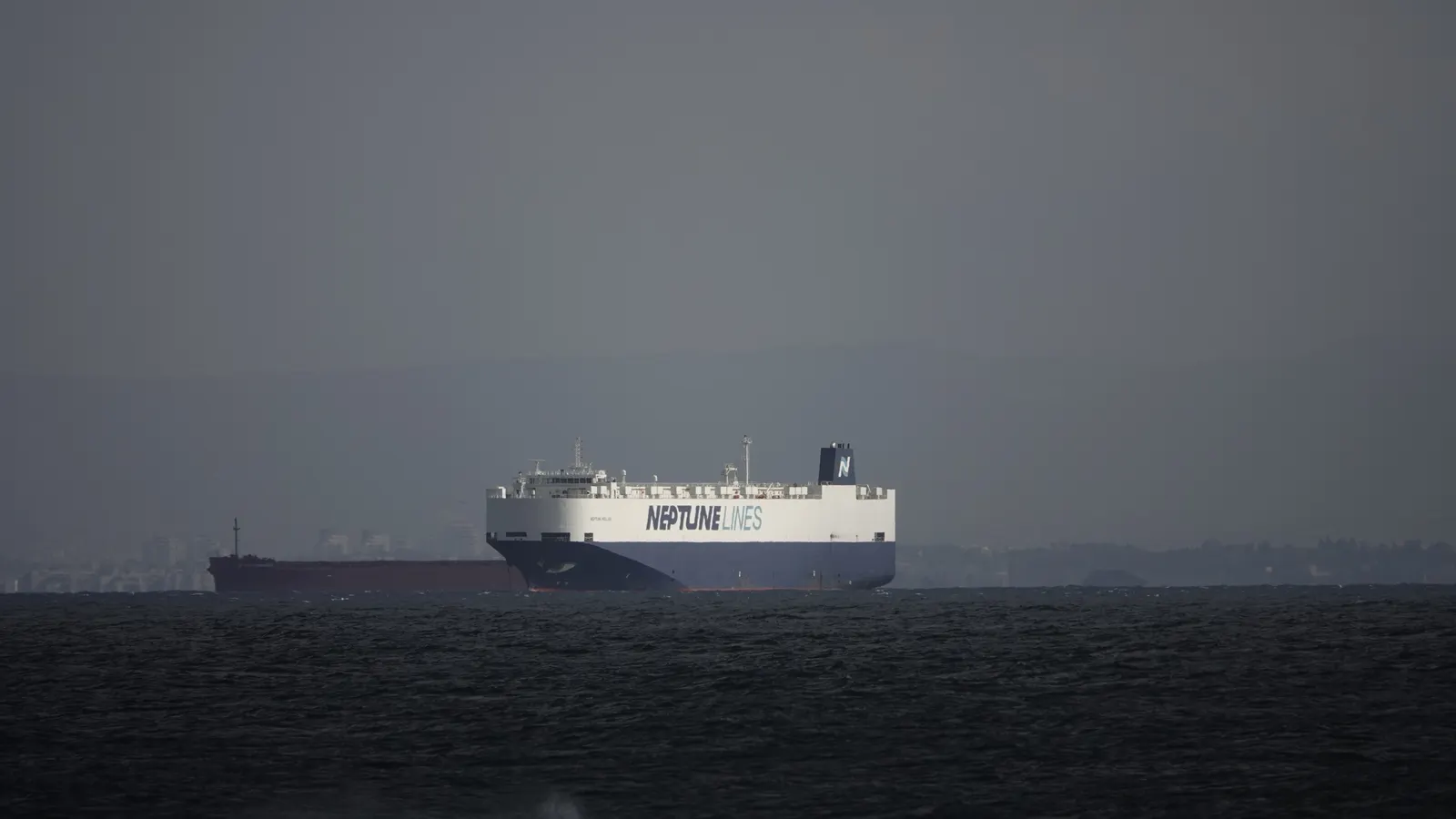
The voyage is the part of an import everyone asks about. It is also the part a dealer controls least. The stages either side of it — buying, inspection, permits, clearance and registration — are where most of the time is won or lost, and some of them run against legal deadlines.
The short version
- An import has seven stages; the voyage is one of them.
- Some countries start a legal clock on arrival — the UK's NOVA within 14 days, Ireland's registration within 30.
- Some need permission before arrival — Jamaica's import permit.
- Documents, not ships, cause most delays.
The timeline, in one paragraph
A car import takes the time to find and buy the car, plus its export paperwork and any pre-shipment inspection, plus the wait for a sailing and the voyage, plus customs clearance and registration at your end. Sea transit depends on the route and whether it is direct; the other stages depend mainly on how complete and consistent the documents are before the car sails.
The stages, in order
- Find and buy the car, including any auction cycle.
- Export preparation: deregistration and the export certificate.
- Destination requirements at source: pre-shipment inspection, cleaning, and any import permit applied for before shipping.
- Wait for a sailing and meet the terminal cut-off.
- The voyage, including any transhipment.
- Clearance: declaration, payment of duty and taxes, release.
- Registration: notifications, approval tests, registration.
The voyage itself is set by the carrier's schedule — see choosing a vessel and shipping line.
The legal clocks that start when the car lands
| Country | Clock | Source |
|---|---|---|
| United Kingdom | Tell HMRC through NOVA within 14 days of arrival; registration is blocked until then | GOV.UK |
| Ireland | Register within 30 days of the car entering the State | Revenue |
| Jamaica | Import permit obtained before the vehicle arrives | Trade Board |
| Uganda | Certificate of Roadworthiness valid for twelve months from issue | UNBS |
| Sri Lanka | A licensed import registered within two weeks of release from port | Import and Export Control Department |
Each authority's rule and link are in the country section below.
Deadlines in your country
| Country | Customs clearance |
|---|---|
| A shipped car must be declared by a shipping company or customs agent, and HMRC must be told it has arrived (NOVA) within 14 days. | |
| A car from outside the EU is declared to Revenue for release into free circulation, and VAT and duty are paid before customs releases it. | |
| A car from outside the EU clears Maltese customs, with duty and VAT paid, before Transport Malta will register it. | |
| Import duty and VAT are paid to Cyprus Customs at importation; a car from the UK has been a third-country import since 2021. | |
| KRA treats a vehicle import like other goods: it is declared, taxed on KRA's valuation and released once duties are paid. | |
| TRA assesses and collects duty, VAT and excise at the port, and releases the car once they are paid. | |
| URA clears the car, and the UNBS inspector confirms that it matches its roadworthiness certificate. | |
| MRA Customs assesses excise and VAT on the car and releases it once they are paid. | |
| The car clears Jamaica Customs on the strength of the Trade Board permit, which is applied for electronically through JSWIFT. | |
| The car clears the Customs and Excise Division against the import licence. | |
| Customs releases the car once GST is paid and biosecurity clearance is given; entry certification follows release. | |
| Sri Lanka Customs assesses duty, excise and luxury tax on the car and releases it once they are paid. |
Choose a country for its full rules and the official sources, checked 27 October 2026.
Customs clearance · United Kingdom
A shipped car must be declared by a shipping company or customs agent, and HMRC must be told it has arrived (NOVA) within 14 days.
- GOV.UK states that you must pay a shipping company or customs agent to make the import declaration for a vehicle that arrives by sea.
- Duty and VAT are paid at the border, and must be paid before the car can be registered.
- A VAT-registered company makes the NOVA notification through HMRC's online NOVA service, which accepts a spreadsheet upload for several vehicles.
Registration · United Kingdom
The car is registered with DVLA on form V55/5 once NOVA, approval and any MOT are complete.
- The registration fee is £55, and DVLA keeps the original foreign registration document.
- The V5C registration certificate can take up to six weeks to arrive.
- The car may not be driven on a public road until it is registered, except to a pre-booked MOT or approval test.
Sources for United Kingdom, checked 27 October 2026:
- Importing vehicles into the UK — GOV.UK
- Importing vehicles into the UK: telling HMRC (NOVA) — GOV.UK
- Vehicle registration: new registrations — GOV.UK (DVLA)
Customs clearance · Ireland
A car from outside the EU is declared to Revenue for release into free circulation, and VAT and duty are paid before customs releases it.
Registration · Ireland
An imported car must be registered within 30 days of entering the State, through the NCTS, which registers vehicles for Revenue and collects VRT.
- Revenue's VRT manual describes booking an NCTS appointment within 7 days of the car entering the State, with registration completed within 30 days.
Sources for Ireland, checked 27 October 2026:
Customs clearance · Malta
A car from outside the EU clears Maltese customs, with duty and VAT paid, before Transport Malta will register it.
Registration · Malta
Registration and licensing are done with Transport Malta, which also assesses the registration tax.
Sources for Malta, checked 27 October 2026:
Customs clearance · Cyprus
Import duty and VAT are paid to Cyprus Customs at importation; a car from the UK has been a third-country import since 2021.
Registration · Cyprus
The Road Transport Department registers the car; the government's business portal gives the registration fee as €150.
Sources for Cyprus, checked 27 October 2026:
- Vehicles from countries outside the European Union — on payment of import duty and VAT — Cyprus Customs & Excise Department
- Vehicles from the United Kingdom — Cyprus Customs & Excise Department
- Running and growing your business — registering a vehicle — Business in Cyprus (Government of Cyprus)
- Road Transport Department — Ministry of Transport, Communications and Works
Customs clearance · Kenya
KRA treats a vehicle import like other goods: it is declared, taxed on KRA's valuation and released once duties are paid.
Registration · Kenya
Once customs has released it, the car is registered with the National Transport and Safety Authority.
Sources for Kenya, checked 27 October 2026:
- Importation procedure for motor vehicles — Kenya Revenue Authority
- What you need to know when importing a motor vehicle — Kenya Revenue Authority
- National Transport and Safety Authority — NTSA
Customs clearance · Tanzania
TRA assesses and collects duty, VAT and excise at the port, and releases the car once they are paid.
Registration · Tanzania
TRA registers vehicles through its Central Motor Vehicle Registration System once the car is cleared and certified.
Sources for Tanzania, checked 27 October 2026:
- Tanzania Revenue Authority — TRA
- Central Motor Vehicle Registration System — guide — Tanzania Revenue Authority
Customs clearance · Uganda
URA clears the car, and the UNBS inspector confirms that it matches its roadworthiness certificate.
Registration · Uganda
URA registers motor vehicles in Uganda once duties are paid.
Sources for Uganda, checked 27 October 2026:
- The UNBS (Inspection and Clearance) Regulations, 2022 — Uganda National Bureau of Standards
- Uganda Revenue Authority — URA
Customs clearance · Mauritius
MRA Customs assesses excise and VAT on the car and releases it once they are paid.
Registration · Mauritius
Vehicles are registered and licensed through the National Land Transport Authority.
Sources for Mauritius, checked 27 October 2026:
- Customs — motor vehicles — Mauritius Revenue Authority
- National Land Transport Authority — NLTA
Customs clearance · Jamaica
The car clears Jamaica Customs on the strength of the Trade Board permit, which is applied for electronically through JSWIFT.
Registration · Jamaica
Once cleared, the car is registered and licensed for the road in Jamaica.
Sources for Jamaica, checked 27 October 2026:
- Motor vehicle — general information — Trade Board Limited
- Pre-shipment inspection criteria (February 2023) — Trade Board Limited
Customs clearance · Trinidad and Tobago
The car clears the Customs and Excise Division against the import licence.
Registration · Trinidad and Tobago
Once cleared, the car is registered with the Licensing Division.
Sources for Trinidad and Tobago, checked 27 October 2026:
- Customs and Excise Division — Ministry of Finance
- Trade Licence Unit — Ministry of Trade, Investment & Tourism
Customs clearance · New Zealand
Customs releases the car once GST is paid and biosecurity clearance is given; entry certification follows release.
Registration · New Zealand
After entry certification the car is registered and licensed for the road.
Sources for New Zealand, checked 27 October 2026:
- Fact sheet: importing goods for business or commercial use (April 2026) — New Zealand Customs Service
- Step 4: Entry certification — NZ Transport Agency Waka Kotahi
- Importing vehicles, machinery, and parts — Ministry for Primary Industries
- Importing a used vehicle — NZ Transport Agency Waka Kotahi
Customs clearance · Sri Lanka
Sri Lanka Customs assesses duty, excise and luxury tax on the car and releases it once they are paid.
Registration · Sri Lanka
Vehicles are registered with the Department of Motor Traffic; a licensed import must be registered within two weeks of release from the port.
Sources for Sri Lanka, checked 27 October 2026:
- Sri Lanka Customs — Sri Lanka Customs
- Mid-Year Fiscal Position Report 2025 — Ministry of Finance, Sri Lanka
- Department of Motor Traffic — DMT
- Importation of a used motor vehicle under import control licence — Department of Import and Export Control
What the timeline does to your cash
Every week between paying for a car and selling it is a week of capital tied up, and for a dealer that is a cost like any other. It belongs in the landed cost. The quickest way to shorten the timeline is to make the documents right before the car sails: a permit applied for in time, an inspection certificate that will still be valid on arrival, and chassis numbers that match on every page. The agent's role is covered in using a customs clearing agent, and the last step in registering imported cars for resale.
With cars and a timeline in mind, you can send a dealer inquiry. The full process is in the dealer's guide to sourcing cars overseas.